
ReStory Beginner Guide: Your First Day
A task-first route through intake, the work mat, cleaning, parts, payment, and early spending.
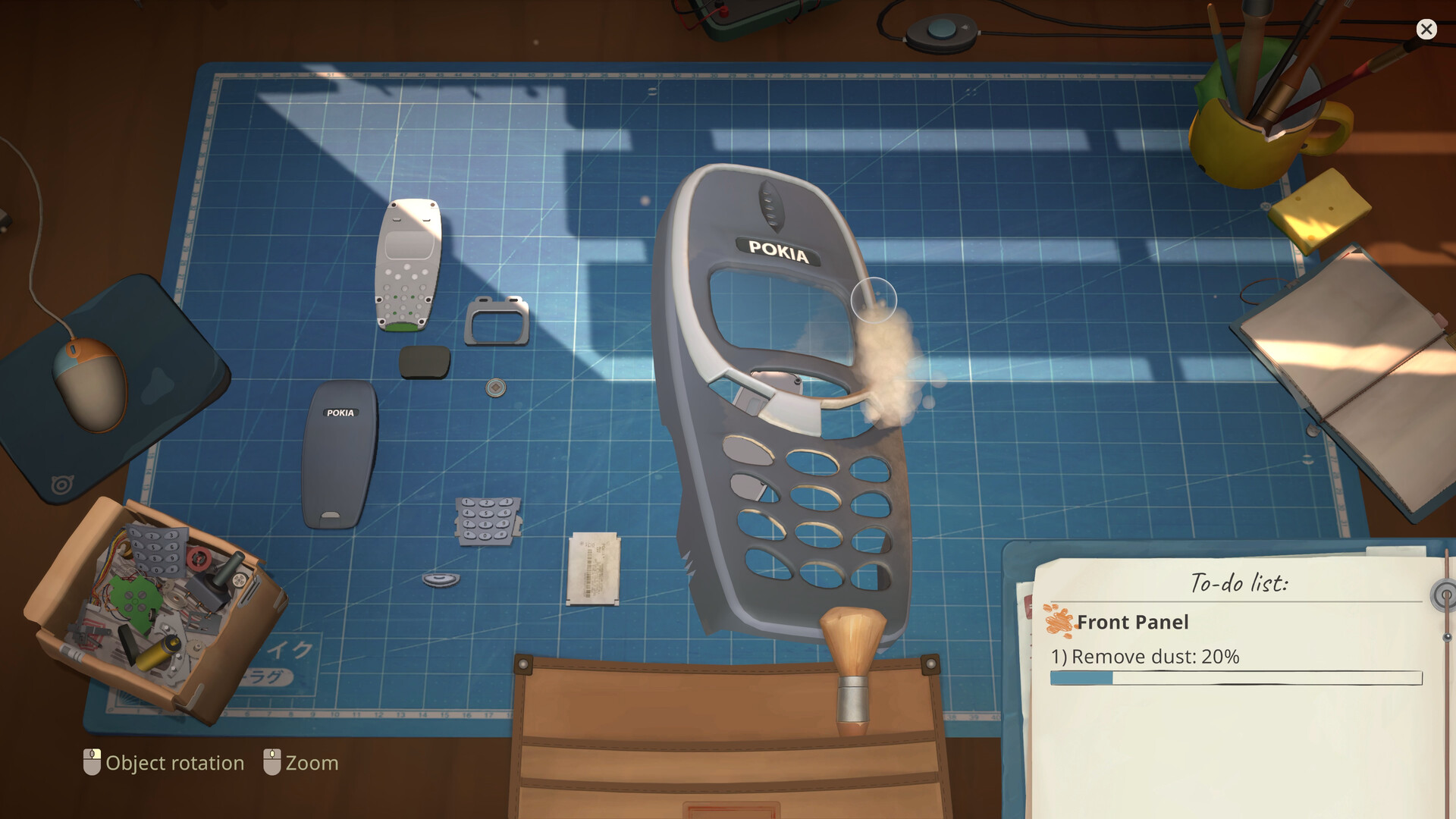
Table of contents
ReStory starts small: a cramped workbench, basic tools, one active repair space, and bills that keep the shop grounded. The useful habit is to treat every job as a short loop instead of rushing toward expensive unlocks.
Your first-day loop
- Read the request before touching the device. A walk-in customer or email order tells you what has to be delivered. Keep that requirement in view while you work.
- Move the device onto the work mat. Only one device can occupy the active mat, so clear finished jobs and donor hardware to the side before accepting more work.
- Use the device checklist. ReStory provides a job guide or to-do list during repairs. It is the safest source for the current objective and prevents you from treating every device as if it needs the same fix.
- Disassemble in visible layers. Remove the outside pieces and screws, then work inward. Notice which parts covered or connected to later pieces; reassembly reverses that dependency.
- Clean or replace only what the job needs. Some early devices need a thorough clean, while others need a working replacement part. A clean-looking device can still have a faulty component.
- Reassemble and return the job. Put the layers back in a valid order, finish the checklist, and complete the handoff before the desk fills with another device.
The opening phone repair is a compact introduction to this rhythm. It teaches cleaning, taking a simple device apart, and rebuilding it without forcing you to memorize a large component tree.
What to do between repairs
Keep the shop ready for the next order rather than turning the bench into storage.
- Move boxed or donor devices off the active mat.
- Keep reusable components instead of throwing away every donor remainder.
- Check email as well as the storefront for work.
- Clean the workshop when it needs attention.
- Review upcoming bills before spending on a cosmetic item or a new license.
The shop can receive both in-person and online orders. That means “no customer at the window” does not always mean “no work available.”
A safe first spending order
There is no verified universal best-profit route, and prices or unlock order can change. Use a decision rule instead:
- Reserve enough money for known bills.
- Buy a required replacement or donor only when it helps finish paid work.
- Add a license when you are ready to accept the device family it opens.
- Upgrade a tool when its saved effort matters to the jobs you are actually doing.
- Decorate after essential work and obligations are covered.
Licenses, tools, storage, and décor are all real progression paths. They do different jobs: licenses widen the work you can accept, tools change how you restore devices, storage keeps parts manageable, and decorations personalize the workshop.
Three mistakes to avoid
Buying parts before checking the job
Not every repair needs a new component. Read the checklist and inspect the device before paying for a donor or a parts box.
Forgetting the assembly order
If a piece will not return to the device, another layer may need to go in first. Reconstruct the sequence from the inside out rather than repeatedly forcing the same part.
Spending through the bill reserve
ReStory rewards experimentation, but rent and other bills still exist. A new license is progress only if you can continue operating after buying it.
Where to go next
Keep How Repairs Work in ReStory open for the bench sequence. When a faulty component is the blocker, use the Spare Parts and Marketplace Guide. For the wider business loop, continue to Shop Growth and Money.
Related guides
How Repairs Work in ReStory
Follow the device checklist from intake through cleaning, component work, and reassembly.
Read guideReStory Spare Parts and Marketplace Guide
Buy direct parts, donor devices, or parts boxes without creating a storage problem.
Read guideReStory Shop Growth and Money Guide
Balance bills, parts, licenses, tools, reviews, storage, and workshop customization.
Read guide